

This post contains a few referral links, marked (affiliate). If you sign up through them, I may earn a small commission at no extra cost to you.
The box arrived and I did the wrong thing on purpose
Nobody hands you the FTC’s #ad rules when your pet page starts working. They hand you a free harness.
About eight months in, a small harness brand DMed us. They loved the girls, they wanted to send a set, no strings, no contract, just “post if you love them.” A box turned up two days later with two harnesses in the exact shade of dusty pink I would have chosen myself. Nicole tolerated hers with the dignity of a tiny sausage-shaped queen. Nora rolled over and refused to be a person for eleven minutes.
I filmed it. It did well. And I wrote a caption that gushed about the harnesses without a single word about where they came from. That box was a sponsored post and I didn’t disclose it.
I want to be clear that I knew. Somewhere in the back of my head a small voice said maybe say they sent these, and I overruled it, because the post felt more natural without it, and because, this is the honest part, I was afraid the word “ad” would tank the reach on a post I liked.
Two months later a bigger brand sent a contract, and clause 9 asked me to confirm that all my past sponsored content complied with FTC disclosure requirements, and to link examples. I sat on the couch with my laptop and a cold cup of tea and slowly scrolled backwards through my own feed with a feeling I can only describe as quiet dread.
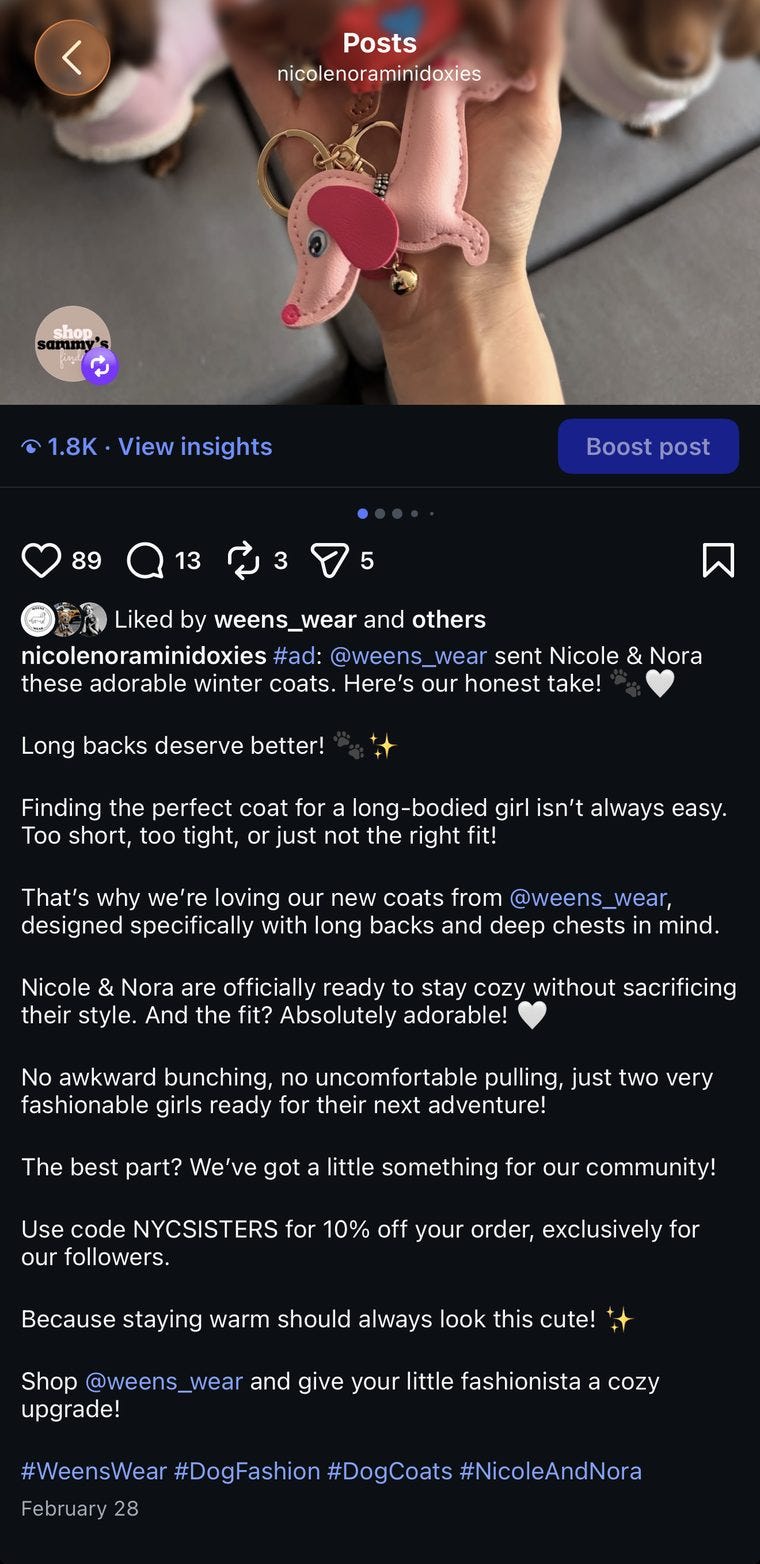
A while back, I broke down why brands scroll past cute pet pages, and the one sentence that fixes it. Getting a brand to notice you is step one. This post is the boring twin of that one: the rules that decide whether the money you build is yours to keep, or a liability with a bow on it. If you missed it, start here →
One more thing before we start: I’m a creator, not a lawyer. This is what I do and why. For anything with real money on the line, read the FTC’s own plain-language guide (linked below) or talk to someone with an actual law degree.
The one word almost every pet creator gets wrong about #ad
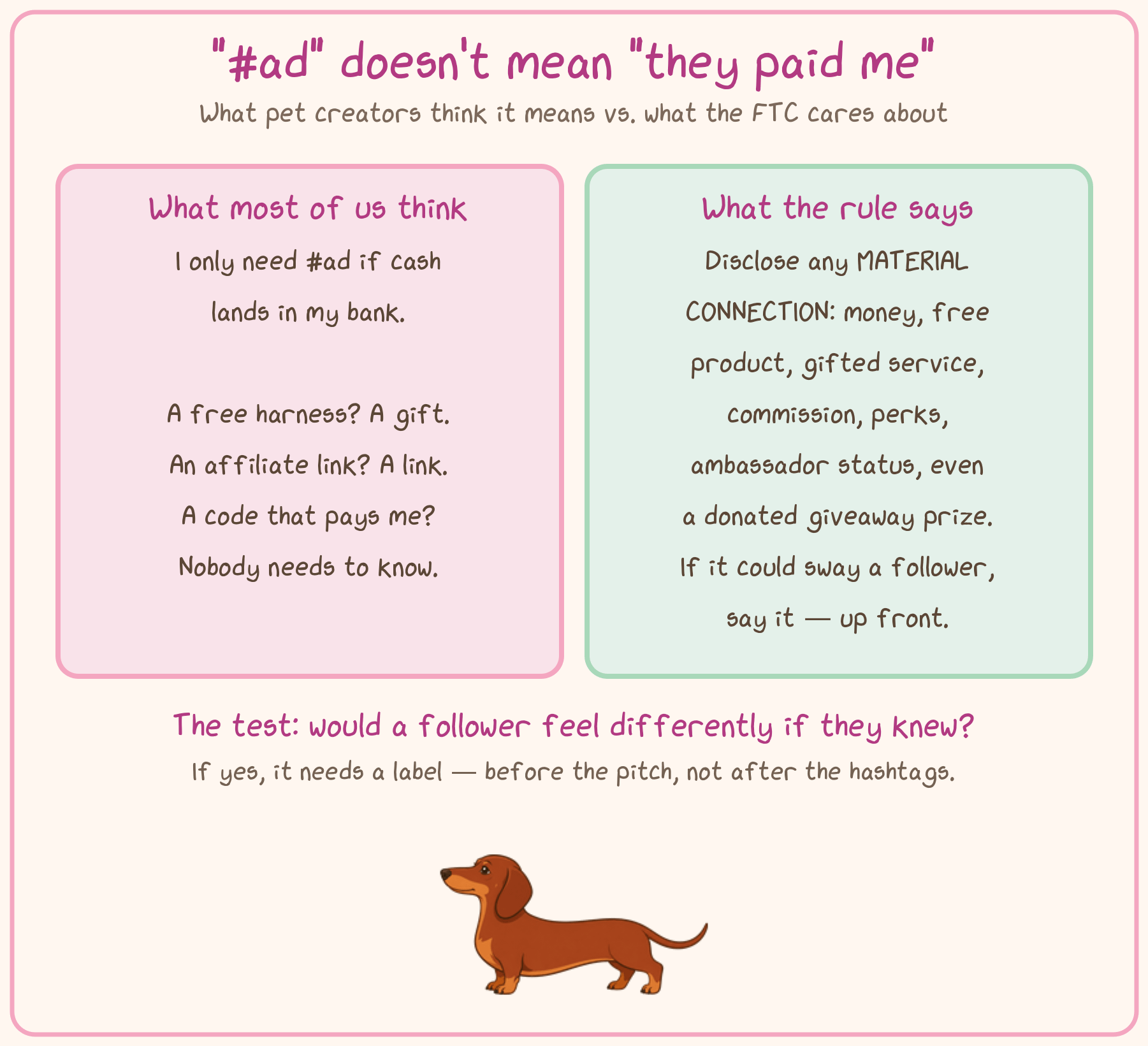
Here is the whole misunderstanding in a sentence: we think “#ad” means “they paid me.” It doesn’t.
The rule isn’t about money. It’s about a material connection: any relationship between you and a brand that a follower would want to know about, because knowing might change how they read your glowing opinion of a $60 orthopedic dog bed.
Money is a material connection. So is a free product. So is a gifted grooming session, a commission link, a code that pays you 10%, an “ambassador” title that comes with free food, and, this one surprises people, a prize a brand donated to your giveaway.
The test I actually use, standing in my kitchen holding a box I didn’t pay for:
Would a follower feel differently about this post if they knew how I got this?
If the answer is even slightly yes, it gets a label. And the label goes before the pitch, not after the hashtags.
🐾 Helping animals is the whole reason we’re here. If you’d like to help too, you can chip in to our shelter fundraiser for Animal Haven, every little bit helps an animal in need. Join us. 🩷
If you want to see how we actually do all this in the wild: the disclosures, the reels, the two dachshunds who refuse to hit their marks, we’re over on Instagram, TikTok and YouTube. 🌭
🩷 Quick one, just hit reply: have you ever posted a gifted product without labelling it? No judgement here. I did it on purpose and then spent a Sunday fixing it.
🐾 The good stuff is below
The free part is the why. The useful part is below: the first-three-words rule, the gray zones, the exact wording, and the one type of caption that gets small pet accounts in real trouble (and it isn’t the missing #ad).
Inside the paid half, you’ll get:
The first-three-words rule: the one habit that fixes most disclosure mistakes
My disclosure swipe file: copy-paste lines for Instagram, TikTok, YouTube Shorts, Stories, Substack and affiliate links
The gray-zone list: eleven situations pet creators hit constantly, sorted into label / don’t label
The caption habit that quietly breaks a different FTC rule, the one that actually gets pet accounts in trouble
My fix-it protocol for old posts, plus the contract clause I now read before the fee
My quick checklist: the whole post in ten lines you can screenshot
The $29 Petfluencer Playbook for about $20 (paid subscribers only)
Every paid post + the full archive
Come join me on the inside 🩷
